
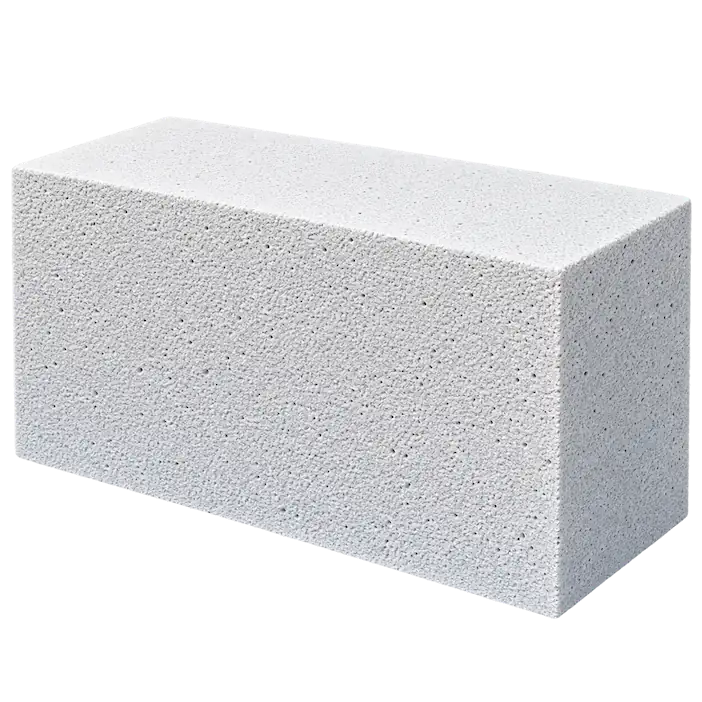
AAC Blocks, commonly known as Heblex Blocks, are modern lightweight building materials manufactured using autoclaved aerated concrete technology. Designed for efficient masonry construction, these blocks combine low density, thermal insulation, dimensional accuracy, and practical installation advantages.
Their cellular structure makes AAC blocks a versatile solution for residential buildings, commercial developments, industrial facilities, and large construction projects.
As a supplier of AAC building materials, we provide solutions for contractors, construction companies, building material importers, distributors, and international development projects.
Autoclaved Aerated Concrete is a cement-based construction material typically manufactured from silica-rich sand, cement, lime, gypsum, water, and an aerating agent.
During production, microscopic air spaces form within the material. The blocks are subsequently cured under controlled high-pressure steam conditions in an autoclave.
This process creates a lightweight cellular structure with a relatively uniform appearance.
AAC blocks generally feature:
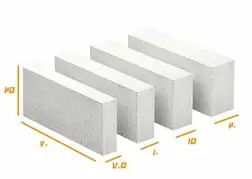
Dimensions, density, and performance characteristics depend on the selected product grade and manufacturing specifications.
One of the primary advantages of AAC blocks is their comparatively low density.
Using lightweight masonry can reduce the dead load associated with wall construction, potentially benefiting structural design, material handling, and installation efficiency.
The effect on overall structural requirements depends on the building design and engineering calculations.
The cellular structure of AAC provides relatively low thermal conductivity compared with conventional dense concrete.
This characteristic supports improved wall thermal performance and can contribute to energy-efficient building design.
The overall thermal performance of a completed wall depends on block thickness, density, mortar joints, finishing materials, and the complete wall assembly.
AAC is an inorganic, non-combustible building material.
When incorporated into properly designed and tested wall assemblies, AAC masonry can contribute to fire-resistant construction.
Fire-resistance ratings must be verified for the complete wall system, including block thickness, joints, finishes, and installation details.
AAC masonry can contribute to acoustic separation between interior spaces.
Its sound insulation performance depends on wall mass, thickness, connections, surface finishes, and construction quality.
For projects with specific acoustic requirements, tested wall assembly data should be reviewed.
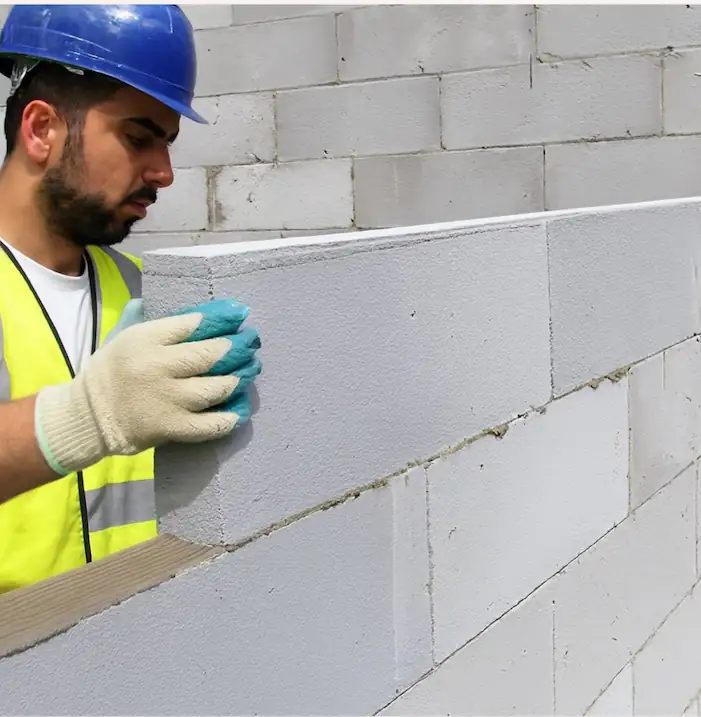
AAC blocks can be cut, shaped, and adjusted using suitable masonry tools.
Their manageable weight and dimensional accuracy can support efficient handling and installation.
Compatible thin-bed mortar or AAC adhesive systems may be used where approved, helping create accurate joints and consistent wall construction.
AAC blocks are commonly used for interior partition walls and external infill walls in apartment buildings, villas, offices, hotels, and commercial developments.
Their lightweight construction and thermal characteristics make them attractive for modern building systems.
AAC masonry can be considered for warehouses, factories, commercial facilities, and large residential developments where efficient wall construction is required.
Lightweight AAC blocks can be useful for selected renovation projects, interior layout modifications, and additional partition walls, subject to structural assessment.
Certain AAC block systems may be used in load-bearing masonry when specifically manufactured, tested, and approved for structural applications.
Load-bearing use must be confirmed through the appropriate strength grade, structural design, and local building regulations. Standard partition blocks should not automatically be treated as load-bearing products.
AAC Blocks can be supplied in different sizes and performance grades according to production availability.
Custom dimensions and special production requirements can be discussed depending on order volume and manufacturing capability.
For professional construction projects, AAC blocks should be evaluated according to the relevant product specifications and destination-market requirements.
Important technical parameters include dry density, compressive strength, dimensional tolerances, thermal conductivity, drying shrinkage, and declared fire performance.
Applicable references may include EN 771-4 and ASTM C1693, subject to project requirements and product certification.
Technical data sheets, test reports, and conformity documents should be reviewed before final material approval.
AAC blocks should be installed using suitable masonry products and according to approved construction details.
External walls require appropriate weather-resistant finishing systems, moisture protection, joint detailing, and compatible anchoring methods.
Suitable AAC-specific fixings should be selected when attaching fixtures or equipment.
Proper storage and handling are also important to minimize moisture exposure and transportation damage before installation.
We supply AAC Blocks for international building material importers, contractors, distributors, developers, and construction projects.
Our B2B supply solutions can be coordinated according to block dimensions, density grade, compressive strength, project quantity, and destination requirements.
For export orders, packaging, pallet configuration, loading quantities, transportation arrangements, and available technical documentation can be discussed before order confirmation.
Buyers can request product specifications, available sizes, photographs, and quotation details to support their purchasing decisions.
Looking for reliable AAC Blocks (Heblex) for your next construction project?
Contact us with your required block dimensions, thickness, density or strength grade, quantity, application, and destination country to receive available product options and a tailored export quotation.
Request Export Quote | Request Technical Specifications | Send Your Project Requirements
SHOWROOM
Reviews
There are no reviews yet.