
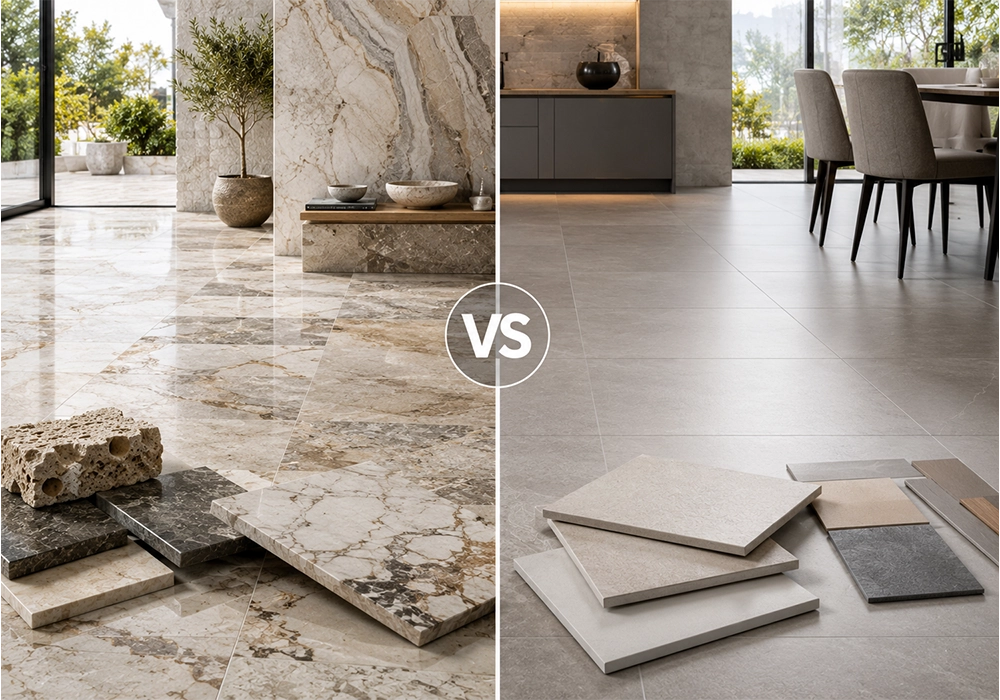
Selecting the right finishing material is one of the most important decisions in any construction or renovation project. Whether you’re designing a luxury villa, commercial building, hotel, office, or public space, the choice between natural stone vs porcelain tiles can significantly influence the appearance, durability, maintenance requirements, and long-term value of the property.
Both materials are widely used in residential and commercial construction because they offer unique advantages. Natural stone is valued for its timeless beauty, unique patterns, and exceptional durability, while porcelain tiles have become increasingly popular due to their versatility, low maintenance, and cost-effectiveness.
However, there is no universal answer to which material is better. The ideal choice depends on your project’s design goals, budget, intended application, environmental conditions, and maintenance expectations.
In this comprehensive comparison, we’ll examine the differences between natural stone and porcelain tiles, helping contractors, architects, developers, designers, and property owners make informed decisions based on performance rather than assumptions.
What Is Natural Stone?
Natural stone is a construction material formed through geological processes over millions of years. Unlike manufactured products, every stone slab or tile has its own distinctive color variations, textures, and natural patterns, making each installation completely unique.
Natural stone has been used in architecture for centuries and remains a preferred choice for luxury residential developments, commercial buildings, hotels, public spaces, and high-end interior design.
Some of the most commonly used natural stones include:
- Marble
- Granite
- Travertine
- Limestone
- Onyx
- Sandstone
- Slate
Each type offers different characteristics in terms of appearance, strength, porosity, and maintenance.
Advantages of Natural Stone
- Unique natural patterns
- Premium aesthetic appeal
- Exceptional durability
- Long service life
- Excellent property value
- Suitable for indoor and outdoor use
- Wide variety of textures and finishes
Natural stone is particularly popular in projects where design, prestige, and long-term performance are top priorities.
What Are Porcelain Tiles?
Porcelain tiles are manufactured ceramic products produced using refined clay, minerals, and high-temperature firing processes. This manufacturing method creates an extremely dense, durable, and low-porosity material suitable for a wide range of applications.
Modern porcelain tiles can replicate the appearance of natural stone, wood, concrete, and other materials while offering consistent dimensions and simplified maintenance.
Today, porcelain tiles are widely used in:
- Commercial buildings
- Shopping centers
- Hotels
- Office spaces
- Hospitals
- Residential developments
- Restaurants
Advantages of Porcelain Tiles
- Low water absorption
- High wear resistance
- Easy cleaning
- Consistent sizing
- Wide range of colors and designs
- Affordable installation
- Excellent moisture resistance
These characteristics make porcelain tiles an excellent solution for projects requiring durability, efficiency, and design flexibility.
Appearance Comparison
When comparing natural stone vs porcelain tiles, appearance is often the first factor considered.
Natural stone offers authentic beauty created by nature itself. Every slab features unique veining, textures, and color variations that cannot be perfectly replicated.
This uniqueness creates luxurious and sophisticated spaces, making natural stone a preferred option for premium architectural projects.
Porcelain tiles, on the other hand, offer remarkable design consistency.
Thanks to advanced digital printing technologies, modern porcelain tiles can imitate marble, granite, concrete, wood, and many other natural materials with impressive realism.
Natural Stone
✔ Unique patterns
✔ Luxury appearance
✔ Natural texture
✔ Exclusive design
Porcelain Tiles
✔ Consistent color
✔ Uniform dimensions
✔ Modern finishes
✔ Large design variety
Durability Comparison
Durability is another critical factor when selecting finishing materials for commercial projects.
Both materials perform exceptionally well when properly installed.
Natural stone is renowned for its incredible lifespan. Many historic buildings constructed with stone remain structurally sound after hundreds of years.
Granite, for example, offers outstanding resistance to wear, scratches, and weather conditions.
Porcelain tiles are engineered for strength and high traffic environments.
Their dense structure makes them resistant to:
- Scratches
- Moisture
- Stains
- Heavy foot traffic
- Temperature changes
- Chemical exposure
For most commercial flooring applications, porcelain provides excellent long-term performance with minimal maintenance.
Maintenance Comparison
Maintenance requirements are one of the biggest differences when comparing natural stone vs porcelain tiles. While both materials are durable and long-lasting, the level of care they require over time varies significantly.
Natural Stone
Natural stone is a porous material, meaning some types can absorb moisture, oils, and stains if they are not properly sealed. To preserve its appearance and performance, periodic maintenance is recommended.
Typical maintenance includes:
- Sealing the surface at recommended intervals
- Cleaning with pH-neutral stone cleaners
- Avoiding harsh chemicals
- Removing spills promptly
- Periodic polishing for certain stone types
With proper care, natural stone can maintain its beauty for decades and often becomes even more attractive over time.
Porcelain Tiles
Porcelain tiles are virtually non-porous and require very little maintenance.
Routine cleaning with water and mild detergent is generally sufficient.
Advantages include:
- No sealing required
- High stain resistance
- Easy daily cleaning
- Excellent moisture resistance
- Minimal long-term maintenance costs
For projects where easy maintenance is a priority, porcelain tiles offer a practical and cost-efficient solution.
Installation Comparison
Installation affects both project costs and long-term performance.
Although both materials require professional installation, the installation process differs considerably.
Installing Natural Stone
Natural stone often requires:
- Surface preparation
- Individual stone selection
- Precision cutting
- Skilled craftsmanship
- Careful alignment
- Sealing after installation
Because every piece of stone is unique, installation generally takes more time and requires experienced installers.
Installing Porcelain Tiles
Porcelain tiles are manufactured with highly consistent dimensions.
This allows for:
- Faster installation
- Reduced material waste
- Easier alignment
- More predictable labor costs
For large commercial projects with tight construction schedules, porcelain tiles often provide significant installation efficiencies.
Indoor vs Outdoor Applications
Both materials perform well in a variety of environments, but each has applications where it excels.
Best Uses for Natural Stone
Natural stone is ideal for:
- Luxury hotel lobbies
- Villa exteriors
- High-end residential interiors
- Feature walls
- Public plazas
- Landscape design
- Outdoor paving
- Staircases
- Architectural facades
Its authentic appearance makes it a preferred choice for projects where visual impact is a priority.
Best Uses for Porcelain Tiles
Porcelain tiles are commonly used in:
- Shopping malls
- Office buildings
- Hospitals
- Restaurants
- Retail stores
- Apartment buildings
- Bathrooms
- Kitchens
- High-traffic corridors
Their durability and ease of maintenance make them particularly suitable for busy commercial environments.
Cost Comparison
Budget is always an important consideration, but evaluating materials based solely on purchase price can be misleading.
Instead, procurement teams should compare the total lifecycle cost.
Initial Investment
Natural stone typically involves:
- Higher material costs
- Increased transportation expenses
- Skilled installation
- Surface sealing
Porcelain tiles generally offer:
- Lower purchase costs
- Faster installation
- Reduced labor expenses
- Lower maintenance costs
Long-Term Value
Although natural stone often requires a larger initial investment, it offers:
- Exceptional longevity
- Increased property value
- Premium architectural appeal
- Timeless aesthetics
Porcelain tiles provide excellent value through:
- Lower maintenance costs
- High durability
- Affordable replacement
- Consistent performance
The best choice depends on the project’s priorities rather than budget alone.
Sustainability Comparison
Sustainability has become an important consideration in modern construction.
Natural Stone
Natural stone is a naturally occurring material that requires relatively little processing compared to many manufactured products.
Advantages include:
- Extremely long lifespan
- Natural appearance
- Low replacement frequency
- Recyclable and reusable
- Minimal synthetic components
Porcelain Tiles
Modern porcelain manufacturing has also become increasingly sustainable.
Many manufacturers now focus on:
- Energy-efficient production
- Recycled raw materials
- Waste reduction
- Water recycling
- Low-emission manufacturing
Both materials can contribute to environmentally responsible construction when sourced from reputable manufacturers.
Side-by-Side Comparison
| Feature | Natural Stone | Porcelain Tiles |
|---|---|---|
| Appearance | Unique natural patterns | Consistent designs |
| Durability | Excellent | Excellent |
| Maintenance | Moderate | Low |
| Water Resistance | Depends on stone type | Excellent |
| Installation | More complex | Faster |
| Design Variety | Natural only | Extensive |
| Cost | Higher initial investment | More budget-friendly |
| Lifespan | Very long | Very long |
| Luxury Appeal | Outstanding | High |
| Commercial Use | Premium projects | Wide range of projects |
Which Material Performs Better in Commercial Projects?
For commercial construction, the answer depends on the project’s objectives.
If the priority is creating a premium architectural statement with timeless elegance, natural stone is often the preferred choice. It delivers unmatched authenticity and adds long-term value to high-end developments such as hotels, luxury villas, office headquarters, and landmark buildings.
On the other hand, if the project demands durability, efficient installation, predictable costs, and minimal maintenance, porcelain tiles are an excellent solution. They perform exceptionally well in retail spaces, hospitals, educational facilities, office buildings, and other high-traffic environments where functionality and ease of maintenance are essential.
Many large-scale developments combine both materials—using natural stone in prestigious public areas and porcelain tiles in functional spaces—to achieve the ideal balance between aesthetics, performance, and budget.